
If you’ve spotted a large, hairy spider sprinting across your garage or backyard, you may have just met a wolf spider. Before you run for the hills or try to torch your property (not recommended), let’s talk about these misunderstood eight-legged houseguests.
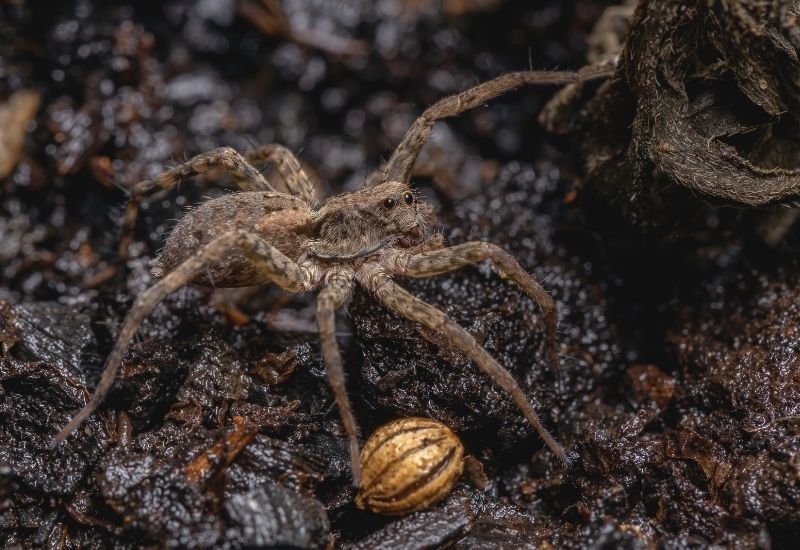
What Is a Wolf Spider?
Wolf spiders are common across North America and often mistaken for tarantulas because of their size and hairy appearance. But they’re not the same, and thankfully, they don’t have a taste for your soul. Here are a few key points about the wolf spider:
- Range in size from ¼ inch to over 1 inch.
- Known for their speed and hunting abilities, they don’t spin webs to catch prey.
- Often found in basements, garages, sheds, and outdoor areas like mulch beds and woodpiles.
They’re the sprinters of the spider world. If spiders had the Olympics, wolf spiders would win gold in the 100-meter dash, and maybe long jump too, just to keep things interesting. Reconsider when outrunning, jumping or catching one.
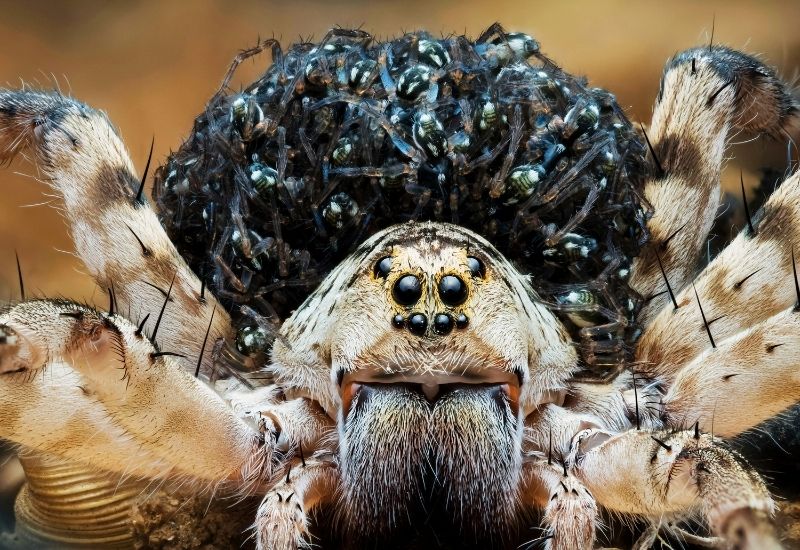
Here’s where it takes a plot twist from other spiders. Wolf spiders carry their babies on their backs. Female wolf spiders are known for their unique maternal care, where they carry their egg sacs attached to their spinnerets until the eggs hatch. Once hatched, the spiderlings crawl onto the mother’s back and are carried around for several weeks until they are ready to disperse. Something I have witnessed. You go to smash this furry creature and what seems like hundreds of babies jump off the back of it and spread in every direction like they have been trained by the US military.
Are Wolf Spiders Dangerous to Humans?
Let’s get this out of the way: no, wolf spiders are not dangerous to humans.
- Their bite can be painful but is not deadly or medically significant for most people.
- Reactions are usually mild, similar to a bee sting.
- They’re not aggressive, but may bite if provoked (like if you sit on one. Please don’t.)
So, while a wolf spider might look like it bench-presses ants for fun, it’s mostly all bark and no bite (okay, a little bite, but nothing dramatic).
What Happens If You Get Bitten?
Though rare, wolf spider bites do happen. Here’s what to expect:
- Local redness and swelling
- Mild itching or stinging
- Symptoms typically resolve in a few days
Seek medical attention if:
- You’re allergic to insect bites
- Symptoms worsen or spread
- The area becomes infected
Still, 99% of the time, you’ll survive. You may not win an Oscar for “Best Overreaction,” but we all have our moments. Especially when the itching and redness starts spreading and we know it came from a furry creature.
Why Are Wolf Spiders in My House?
Your home is basically an all-inclusive resort to a wolf spider.
- Warm shelter
- Plenty of insects to eat
- Dark hiding spots
- Free WiFi (okay, maybe not this one)
Common entry points:
- Cracks in foundation
- Gaps around windows and doors
- Vents and garage doors
How to Keep Wolf Spiders Away
Want to make your home less attractive to wolf spiders? Follow these simple tips:
- Seal entry points around windows, doors, and the foundation.
- Declutter basements and garages, they love hiding in boxes.
- Keep outdoor lighting to a minimum (attracts insects = spider buffet).
- Trim back vegetation around your home’s perimeter.
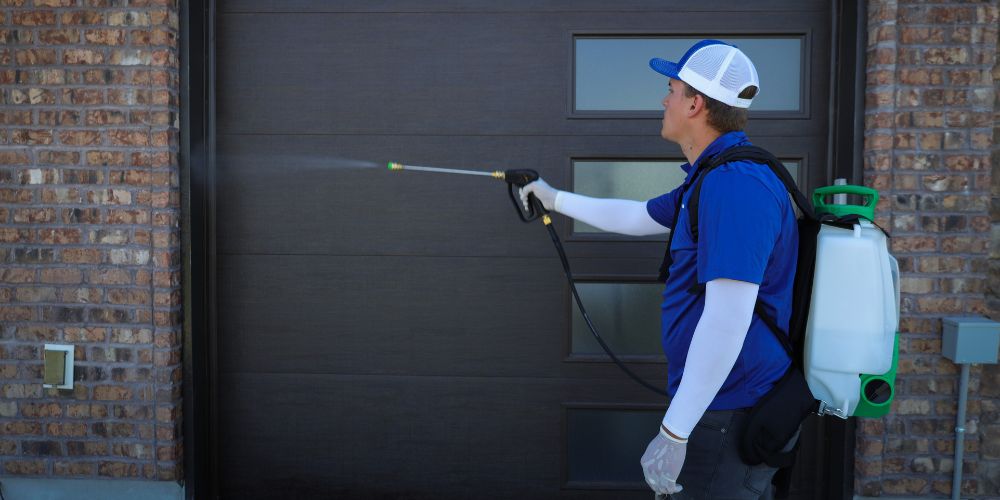
- Contact a Professional Pest Control Company to rid your home of all pests.
Or you can try politely asking them to leave. They won’t listen, but it’s good practice for setting boundaries.
When to Call Pest Control
If you’re seeing wolf spiders regularly or can’t sleep because of that one you lost sight of. it’s time to call in the pros.

- Ongoing spider sightings
- Signs of an insect infestation (their food source)
- You’ve had one too many “eight-legged surprise” moments
Professional pest control can identify entry points, and provide regular treatments to keep spiders (and other pests) out for good.
Final Thoughts
Wolf spiders might look terrifying, but they’re more of a nuisance, or cause nightmares, more than a threat. They can populate like wildfire too with the amount of babies on their backs ready to launch.
But if you’re not keen on cohabitating with creepy crawlers, remember: you go to smash or relocate that thing and you may be triggering the 100 babies waiting for their time to shine. We’re just one call away from sending those wolf spiders packing. No flamethrowers needed.